







Furnace Troubleshooting: What to Check Before Calling a Technician
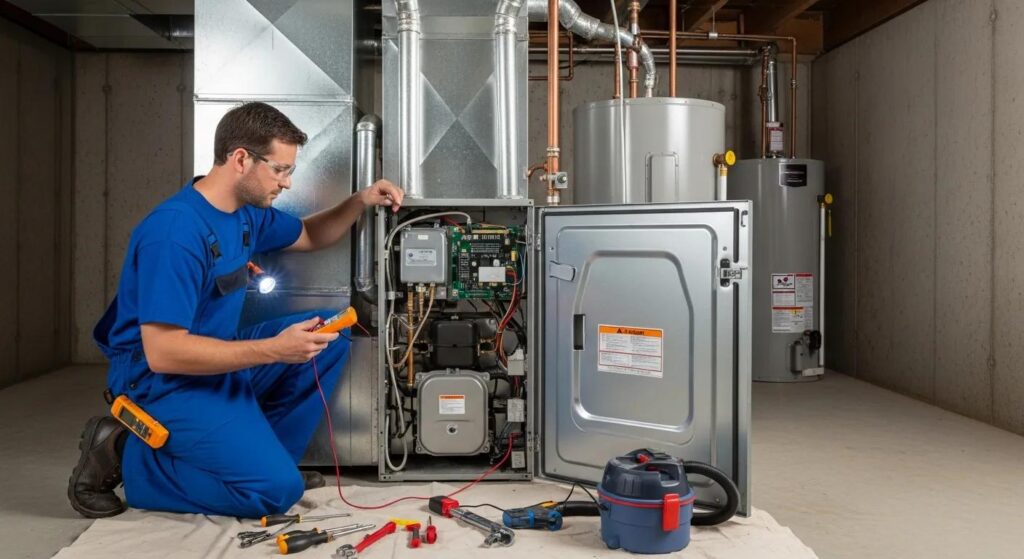
Furnace troubleshooting helps homeowners quickly pinpoint common heating problems so you can decide whether a simple, safe fix will get your heat back or if it’s time to call a pro. This guide walks through typical faults — thermostat and power issues, dirty filters, ignition problems, short cycling, and airflow restrictions — in a clear, step-by-step order that reduces unnecessary service calls without sacrificing safety. You’ll find practical diagnostics for furnaces that won’t start, how to spot dirty furnace filter symptoms, reasons a furnace might blow cold air, simple fixes for short cycling, and straightforward criteria for when to contact a technician. We also cover how regular maintenance prevents many of these issues and improves indoor and efficiency. Expect checklists, easy tables, and safety-first decision points to help you take the right next step.
What Are the First Steps to Diagnose a Furnace That’s Not Turning On?
When a furnace won’t turn on, the issue usually falls into three areas: controls (thermostat), power (switch and breaker), and fuel/ignition. Checking those areas in order often reveals the simplest fix. Start with the thermostat — wrong mode, dead batteries, or a schedule setting are common culprits — then confirm the furnace switch and the circuit breaker, and finally look for fuel or error codes on the furnace control board. These checks save time and cut down on unnecessary service calls while showing when electrical or gas work needs a licensed technician. Use the checklist below to move from low-risk checks to items that may need professional attention.
Follow this numbered checklist to diagnose a that won’t turn on:
- Make sure the thermostat is set to HEAT and the set temperature is above the room temperature.
- Replace thermostat batteries and reboot smart thermostats if they seem unresponsive.
- Check the furnace power switch (usually on or near the unit) is ON and the furnace breaker hasn’t tripped.
- Look for visible error lights or codes on the furnace and write them down for the technician if needed.
- For gas furnaces, confirm the gas valve is open and verify another gas appliance is working as a quick check.
Those steps fix many no-heat situations. If they don’t, move on to confirming power and ignition systems before calling a technician.
Intro to diagnostic table: The table below lists key components to check, what to inspect, and quick fixes so you can triage a non-starting furnace efficiently.
| Component | What to Check | Expected Result / Quick Fix |
|---|---|---|
| Thermostat | Power, mode, batteries | Set to HEAT, swap batteries, reboot smart unit |
| Furnace switch | ON/OFF position | Turn switch ON to restore control power |
| Circuit breaker | Tripped breaker for furnace circuit | Reset breaker if tripped; watch for repeated trips |
| Gas supply (gas furnaces) | Gas valve position, other gas appliances | Open valve or contact utility if no gas flow |
| Error codes | Control board LEDs or display codes | Record code and check manual or call technician |
This table helps you prioritize checks and gather useful details for a technician if the problem continues.
How Can I Verify the Furnace’s Power Supply and Circuit Breaker?
Power problems are a common reason a furnace won’t run. Check the furnace power switch (often on the unit or nearby) to make sure it’s ON, then inspect the home’s breaker panel for a tripped breaker labeled furnace or HVAC. If a breaker is tripped, switch it fully OFF and then back ON to reset it — but if it trips again right away, stop and call an electrician or HVAC technician to investigate. Also check any fused disconnects or safety switches on the furnace cabinet and make sure they’re properly seated. Restoring basic power will bring many furnaces back to life; if power is steady, the next area to check is ignition and fuel systems.
How Do I Identify and Fix Dirty Furnace Filter Symptoms?
Dirty furnace filter symptoms include reduced airflow, higher energy use, and inconsistent room temperatures because a clogged filter limits the air moving through the heat exchanger and ducts. Regular inspections and prompt filter replacement protect components and prevent short cycling or overheating that can cause safety shutdowns. A quick hold-to-light or visual check will usually show heavy dust or discoloration; replacing or cleaning a reusable filter restores airflow and eases blower strain. Below are common signs a filter needs attention and guidance on when to replace it.
Common signs a filter is clogged or dirty:
- Weaker airflow from registers and cooler rooms than usual.
- Filter looks dark or blocked when you hold it up to light.
- Furnace cycles more often, energy bills rise, or dust builds up around vents.
If you see these signs, replace the filter right away, then recheck airflow and whether cycling and temperature balance return to normal.
Intro to filter action table: This table maps typical filter-related symptoms to homeowner actions and the expected outcome, making the next step clear.
| Component | Symptom | Action |
|---|---|---|
| Air filter | Reduced airflow | Replace disposable filter or clean reusable filter |
| Filter pleats | Dark, clogged material | Install a new filter and monitor return airflow |
| Furnace cycling | Increased on/off cycles | Replace filter and observe cycle lengths |
| Energy use | Higher monthly bills | Replace filter and reassess efficiency |
Sticking to a regular filter schedule prevents many service calls and helps keep indoor air clean by removing particles from circulated air.
What Are the Signs of a Clogged or Dirty Furnace Filter?
A clogged filter shows clear physical signs and system impacts that are easy to spot and fix, protecting the blower motor and heat exchanger from extra strain. A disposable filter will look dark and dusty; holding it to light will show little to no light passing through when it’s clogged. Performance signs include weak vent airflow, uneven heating, and the furnace running longer or cycling more — all of which raise energy use. If you have pets or allergies, check filters monthly since dander and particulates clog filters faster. Catching these signs early means a simple replacement or cleaning usually restores normal operation.
How Do I Properly Clean or Replace My Furnace Air Filter?
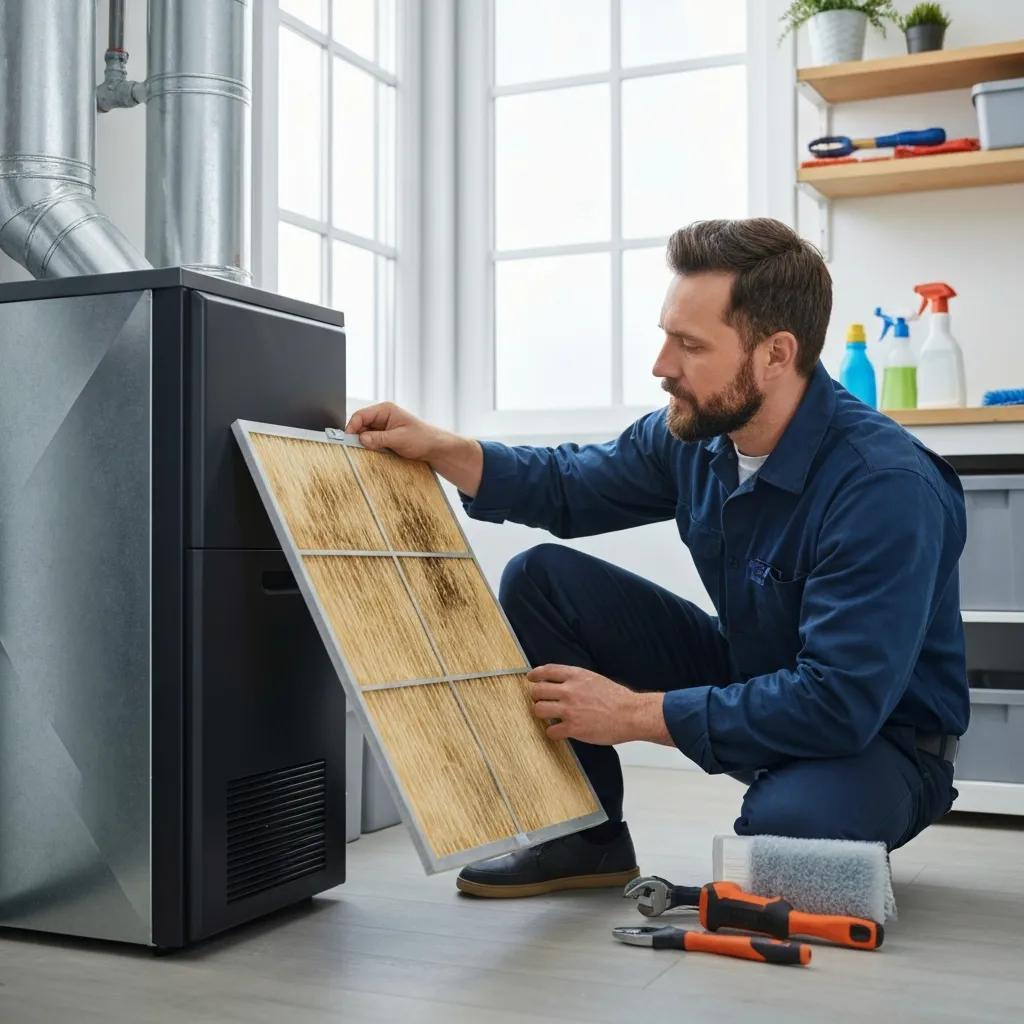
Always turn off furnace power at the switch before removing the filter. Check the filter slot for size markings and arrow direction, then slide out the old filter. For disposable filters, insert a new one with the arrow pointing toward the furnace. Reusable filters should be vacuumed, washed per manufacturer instructions, dried completely, and reseated to keep a good seal — never run the furnace with a wet filter. After replacing the filter, restart the system and watch airflow and cycle behavior through one full heat cycle. Replace filters every 1–3 months depending on usage and home conditions to avoid common failures and keep indoor air quality high.
Why Is My Furnace Blowing Cold Air and How Can I Troubleshoot It?
When a furnace blows cold air, causes can be as simple as thermostat or fan settings or as serious as ignition failure. Some cold air at startup is normal until the heat exchanger warms up, but sustained cold air points to a mis-set thermostat, ignition or pilot failure on gas units, or airflow problems in high-efficiency systems. Start with controls and vents, then check ignition or pilot status before calling a pro for fuel or sealed-combustion issues. These steps will tell you whether a quick homeowner action like switching the thermostat mode or replacing batteries will restore heat or if the unit needs technician service.
Common causes for sustained cold air include:
- Thermostat accidentally set to FAN-ON or setpoint below room temperature.
- Ignition or pilot light failure on gas furnaces — blower runs but no heat.
- Blocked vents, frozen condensate lines, or airflow restrictions preventing heat transfer.
After checking thermostat and vents, verifying the pilot or ignition status is the next diagnostic step and helps you decide whether a safe reset is possible or you should call a professional.
What Are the Common Causes of Furnace Short Cycling?
Short cycling happens when the furnace can’t finish a normal heat cycle or safety systems shut the burner down early — both reduce efficiency and can shorten equipment life. Restricted airflow (dirty filters or blocked returns) can overheat the furnace and trip the high-limit switch. Control problems include faulty thermostats, mislocated sensors, or dirty flame sensors that interrupt the burner. Knowing these categories lets you try low-risk remedies first and understand when repeated or sudden cycling should be handled by a pro.
What Steps Can I Take to Resolve Short Cycling Before Calling a Technician?
Start with airflow and thermostat checks to reduce short cycling: replace or clean the filter, clear obstructions from returns, and ensure supply vents are open. Verify the thermostat isn’t being fooled by nearby heat sources or drafts. After making adjustments, restart the furnace and monitor one full heat cycle — if short cycling continues, note cycle timing and any error lights, then contact a technician to inspect flame sensors, control boards, or heat exchanger safety systems. These actions reduce unnecessary service calls and give a technician useful information if you need help.
When Should I Call a Professional HVAC Technician for Furnace Repair?
Call a licensed HVAC technician right away for safety-critical signs like the smell of gas, a carbon monoxide alarm, visible sparks or smoke, or persistent failures after safe DIY checks — these are high-risk situations that need professional intervention. Also call a pro for complex problems such as suspected heat exchanger cracks, sealed-combustion issues, repeated electrical faults, or unresolved ignition failures; professional diagnosis protects safety, warranties, and your home. If the system remains unpredictable after following earlier diagnostic steps, persistent short cycling, strange smells, or combustion concerns are clear reasons to escalate. The table below groups urgent problems by risk and action so you can respond quickly and safely.
| Problem | Risk Level | Recommended Action |
|---|---|---|
| Gas smell | High | Evacuate, call emergency services or utility, then HVAC pro |
| CO alarm activation | High | Evacuate, seek immediate help, then schedule an HVAC safety inspection |
| Repeated electrical tripping or smoke | High | Shut off system and call a technician or electrician |
| Persistent ignition failure after checks | Medium-High | Contact an HVAC technician for gas/ignition service |
If you notice any high-risk signs — especially gas odors or a CO alarm — evacuate first and involve emergency services before calling an HVAC professional for follow-up.
For homeowners in Kern County and the surrounding area, local technicians can respond quickly to safety-critical calls. If your issue matches the high-risk criteria above or remains unresolved after DIY steps, contact MRV Service Air Inc., a Delano-based HVAC company that handles heating repair, furnace service, maintenance, and other HVAC needs. Their and Request Service options are designed to get a qualified technician to your home for safety-focused diagnostics and repairs.
What Safety Concerns Require Immediate Professional Help?
Some signs mean you should stop DIY troubleshooting and get emergency or professional help right away. The most urgent: the smell of gas, a carbon monoxide alarm, visible smoke or burning smells, electrical sparks, or anyone feeling faint or unwell. In those cases, evacuate the home and call emergency services or your utility company first. After the area is safe, arrange for a certified HVAC technician to inspect gas lines, combustion parts, and the heat exchanger before returning home or restarting the furnace. Don’t try to restart the unit if you see these critical signs — safety first.
Short safety note and local CTA: If you smell gas, hear a CO alarm, or see smoke, evacuate immediately and then contact MRV Service Air Inc. to schedule a safety inspection and repair from a Delano technician.
Which Furnace Problems Are Too Complex for DIY Repairs?
Complex furnace work — sealed combustion assemblies, heat exchanger inspection or replacement, gas valve servicing, or major electrical/control board repairs — requires licensed technicians and specialized tools. Attempting these repairs without credentials risks injury, voids warranties, and can create hazards like carbon monoxide leaks or fire. Examples of non-DIY repairs include diagnosing a cracked heat exchanger, replacing a gas valve, servicing sealed combustion chambers, or fixing major control board failures. Leave these jobs to certified professionals to keep your family and home safe and to meet code and warranty requirements.
How Can Regular Furnace Maintenance Prevent Troubleshooting Issues?
Routine furnace maintenance finds small problems before they become breakdowns by cleaning parts, checking combustion safety, and making sure airflow and controls are correct. Annual tune-ups usually include filter checks, burner and heat-exchanger inspections, ignition testing, thermostat calibration, and airflow checks — covering the most common causes of no-heat calls, short cycling, and cold-air complaints. Preventive maintenance also helps indoor air quality by keeping filters and ducts cleaner and can lower energy use through better combustion and reduced blower work. Below is a simple maintenance checklist to use before the heating season to reduce troubleshooting needs and improve reliability.
Maintenance checklist to prevent common furnace issues:
- Replace or clean the air filter and check return grilles for obstructions.
- Inspect burners, igniter/pilot assembly, and the control board for wear or error codes.
- Confirm proper venting, check condensate drains on high-efficiency units, and test thermostat accuracy.
A short maintenance table below shows how routine service tasks map to common troubleshooting problems and the typical benefits to homeowners.
| Maintenance Task | Prevents | Typical Benefit |
|---|---|---|
| Filter replacement | Restricted airflow, short cycling | Improved airflow and lower energy use |
| Ignition and burner check | Ignition failure, cold air | More reliable starts and fewer no-heat calls |
| Heat exchanger inspection | Cracks, CO risk | Safety assurance and prevention of hazardous leaks |
These maintenance tasks reduce emergency repairs and improve safety while directly addressing the issues in this troubleshooting guide.
MRV Service Air Inc. offers maintenance and tune-up plans designed to catch small problems before they become major repairs. Their seasonal inspections focus on filters, airflow, ignition checks, and system performance to improve reliability and indoor air quality. Homeowners in Delano and throughout Kern, Kings, and Corcoran counties can schedule maintenance to keep furnaces running efficiently and reduce mid-winter breakdowns.
Key Takeaways for Furnace Troubleshooting and Maintenance
Good furnace troubleshooting gives homeowners the confidence to solve simple problems, avoid needless repair calls, and keep their homes comfortable. By knowing the key checks and sticking to routine maintenance, you can prevent many common issues and improve system efficiency. For persistent or safety-related problems, always seek professional help to ensure reliable, code-compliant repairs. If you need assistance, explore our services to keep your furnace running safely and efficiently.