







How California Homeowners Can Save Big on HVAC Upgrades Right Now
California energy rebates for hvac upgrades are available through several programs that can significantly reduce what you pay out of pocket for a new heat pump or HVAC system. Here’s a quick look at the main options:
Top California HVAC Rebate Programs (April 2026)
| Program | Who Qualifies | Max Rebate |
|---|---|---|
| HEEHRA (Phase I) | Income-qualified homeowners (<80% AMI) | Up to $8,000 |
| HEEHRA (Phase I) | Moderate income (80–150% AMI) | Up to $4,000 |
| TECH Clean California | Most CA homeowners | Up to $4,000 |
| Federal 25C Tax Credit | All eligible taxpayers | Up to $2,000 |
| SMUD (gas-to-electric) | SMUD service area customers | Up to $3,000 |
Important note: As of February 24, 2026, HEEHRA single-family rebates are fully reserved statewide. New income verifications are no longer being accepted. However, other programs like TECH Clean California and federal tax credits may still apply to your situation.
If your HVAC system is aging, running it is likely costing you more than it should — especially during Kern County’s extreme summer heat and cold winter nights. The good news is that California has invested heavily in making it easier and more affordable for homeowners to switch to modern, efficient heat pump systems. Between state programs, utility rebates, and federal tax credits, the savings can stack up fast.
The challenge is knowing which programs you actually qualify for, how to combine them correctly, and how to avoid leaving money on the table — or falling for a scam. This guide breaks it all down clearly.
Understanding California Energy Rebates for HVAC Upgrades
Navigating california energy rebates for hvac upgrades can feel like a full-time job, but we are here to simplify it. The landscape is dominated by three major pillars: the High-Efficiency Electric Home Rebate Act (HEEHRA), TECH Clean California, and Federal tax credits. Each serves a different purpose, but when they work together, the financial relief for your home comfort project is substantial.
HEEHRA is a federally funded program under the Inflation Reduction Act, specifically designed to help low-to-moderate-income households electrify their homes. TECH Clean California, on the other hand, is a state initiative aimed at driving the market toward heat pump technology. Finally, federal tax credits provide a “bottom-line” reduction on your tax liability.
For those looking to improve their overall home performance, there is more info about energy efficiency services that can help you understand how these upgrades fit into a larger plan for your property.
Comparison of Major HVAC Incentives
| Feature | HEEHRA | TECH Clean CA | Federal 25C Credit |
|---|---|---|---|
| Type | Point-of-sale Rebate | Contractor-led Incentive | Tax Credit |
| Max Amount | Up to $8,000 | Up to $4,000 | Up to $2,000 |
| Income Limit | Yes (<150% AMI) | No (varies by region) | No |
| Primary Goal | Equity & Electrification | Market Transformation | Efficiency Broadly |
The 2026 Status of HEEHRA and Federal Incentives
As we move through April 2026, the status of these programs has shifted. The HEEHRA Phase I single-family rebates saw unprecedented demand and were fully reserved statewide by February 2026. This means that if you haven’t already secured a reservation code, you might be looking at a waitlist or waiting for the rollout of Phase II.
Phase II is currently in development by the California Energy Commission (CEC), with an additional $152 million expected to be injected into the program. For now, income verification through the official portal is paused for new single-family applicants, but multifamily properties may still find paths forward. If you are concerned about your current furnace or heater, you can find more info about heating systems to see what modern alternatives are available while we wait for new funding cycles.
Maximizing Savings with California Energy Rebates for HVAC Upgrades
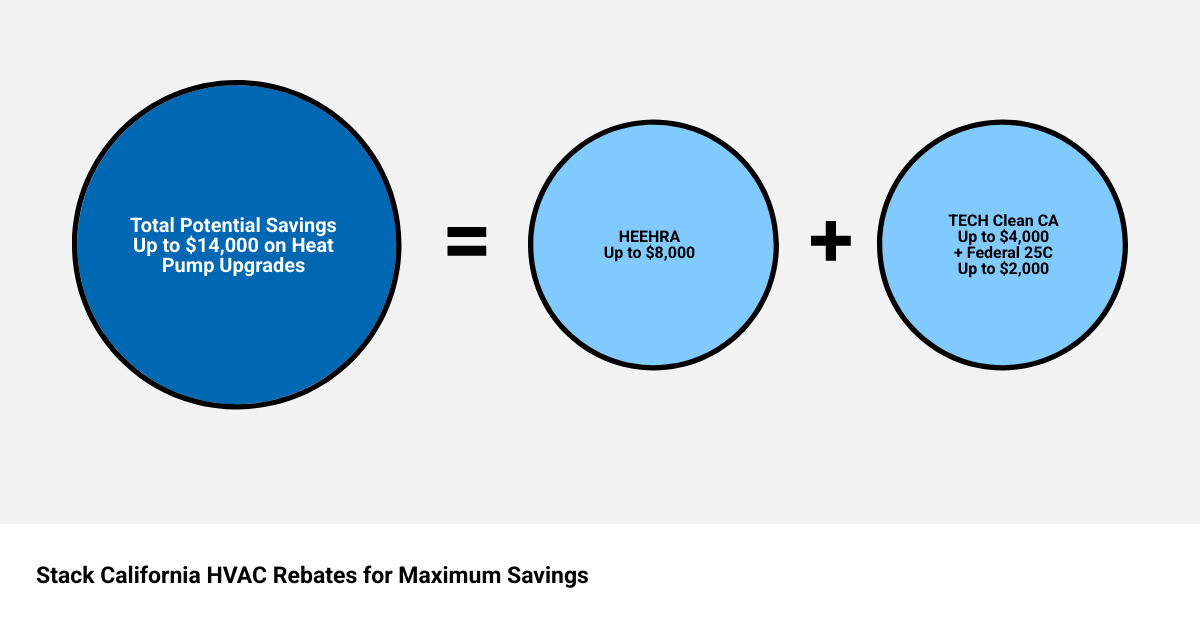
The secret to getting the most out of your investment is “stacking.” This is the practice of combining multiple incentives for a single project. For example, while HEEHRA might be reserved, you can still utilize the TECH Clean California incentives (up to $4,000) and layer them with the Federal 25C tax credit (up to $2,000).
Local utility programs also play a huge role. Southern California Edison (SCE) customers can access bill credits through the SCE Marketplace for smart thermostats, while those in the SMUD service area have seen rebates up to $3,000 for gas-to-electric conversions. If you are looking for a highly efficient, targeted solution, you might want more info about mini-split HVAC systems, which often qualify for the highest tiers of these rebates due to their incredible efficiency.
Qualifying Equipment and Efficiency Standards
Not every air conditioner or heater qualifies for these massive savings. To protect the environment and ensure homeowners actually save money on their monthly bills, the state and federal governments set strict technical standards.
The most important metric to watch is the SEER2 (Seasonal Energy Efficiency Ratio 2) rating. Most rebate programs require a minimum of 15.2 SEER2. Additionally, equipment must be ENERGY STAR certified. We often recommend two-stage or variable-speed compressors. Unlike traditional “on/off” systems, variable-speed units can ramp up or down to meet the exact cooling or heating needs of your home, using much less energy in the process. For more details on how these systems integrate into your home, check out more info about central HVAC services.
Why Heat Pumps Lead California Energy Rebates for HVAC Upgrades
Heat pumps are the “star of the show” for California’s electrification goals. Why? Because they are dual-function systems that provide both heating and cooling in a single unit. They are also up to 300% (3x) more efficient than traditional gas furnaces because they move heat rather than generating it through combustion.
This shift significantly reduces greenhouse gas emissions and improves indoor air quality by removing gas combustion from the home. If you suffer from allergies or are concerned about pollutants, there is more info about indoor air quality that explains how switching to a heat pump can make your home’s air cleaner and safer.
Additional Incentives for Related Home Improvements
When you upgrade your HVAC system, you might find that your home needs other adjustments to handle the new technology. Fortunately, california energy rebates for hvac upgrades often extend to these “enabling” improvements:
- Electrical Panel Upgrades: If your old panel can’t handle a new electric heat pump, rebates can help cover the cost of a 200-amp upgrade.
- Insulation and Weatherization: Keeping the air you just paid to cool or heat inside your home is vital. Federal credits cover up to 30% of insulation costs.
- Smart Thermostats: Programs like Golden State Rebates provide instant coupons for smart thermostats that help you manage energy use.
- Ductwork: Leaky ducts can waste 20-30% of your system’s energy. You can find more info about ductless HVAC if you want to bypass duct issues entirely.
Step-by-Step Guide to Claiming Your Incentives
Claiming thousands of dollars in rebates requires following a specific process. You cannot simply buy a unit at a big-box store and expect a check in the mail.
- Verify Income: For HEEHRA, use the HEEHRA Eligibility Express portal to see if you fall under the 80% or 150% Area Median Income (AMI) thresholds.
- Find a Certified Contractor: Use the “Switch Is On” Contractor Finder. Only TECH-certified and HEEHRA-trained professionals can reserve these specific funds for you.
- Get Multiple Bids: We always suggest getting at least three bids to compare equipment types and total project scope.
- Reserve Funds: Your contractor must submit a reservation request before the installation begins. Retroactive rebates are generally not allowed.
- Installation and Documentation: Once the system is installed, your contractor handles the final rebate submission, and you claim your federal tax credits when you file your annual returns using IRS Form 5695.
For a deeper look at what to expect from a professional partnership, see more info about HVAC contractor services.
Finding TECH-Certified and HEEHRA-Trained Professionals
In California, the contractor is the gatekeeper to your rebates. To qualify for TECH Clean California or HEEHRA funds, the company must have completed specific training and maintain active certification. Look for the official HEEHRA badge or TECH Clean California logo on their website. This ensures they know how to navigate the state’s complex reservation portal. If you are in the early stages of a major home renovation, more info about planning and design can help ensure your HVAC system is sized perfectly for your space.
Avoiding Common Rebate Scams and Fraud
With so much federal and state money available, scammers have unfortunately entered the market. Always remember:
- No “Free” Systems: If someone knocks on your door promising a completely free HVAC system with no strings attached, be wary.
- Protect Your Privacy: Never share your social security number or detailed financial information with a contractor over the phone. Income verification should be done through the official HEEHRA portal.
- Official Portals Only: Use sites like “The Switch Is On” or the California Energy Commission’s official pages to verify program status.
- Reporting: If you suspect fraud, report it to the CEC or the TECH Clean California program immediately. For those concerned about proper installation and safety, check out more info about ventilation work.
Frequently Asked Questions about California HVAC Rebates
Can I stack state rebates with federal tax credits?
Yes! Layering incentives is the best way to save. You can typically combine the Federal 25C tax credit (up to $2,000 for heat pumps) with TECH Clean California incentives. However, as of mid-2025, some specific combinations of HEEHRA and TECH incentives for the same piece of equipment may have new restrictions, so always ask your contractor for the current “stacking” rules.
Are renters or multifamily properties eligible for these upgrades?
Absolutely. While the single-family HEEHRA funds are currently reserved, multifamily programs have their own funding pools. Renters can benefit if their landlords agree to the upgrades. In many cases, multifamily properties can receive up to $14,000 per unit for comprehensive electrification projects if they meet income-qualification requirements for their tenants.
What happens if the HEEHRA funds are fully reserved?
Don’t panic! While HEEHRA is popular, it isn’t the only game in town. TECH Clean California incentives are still widely available in many regions. Additionally, utility-specific programs (like those from SCE or local municipal utilities) continue to offer substantial rebates. You can also join waitlists for Phase II HEEHRA funding, which is expected to open as the state draws down more federal tranches.
Conclusion
Upgrading your home’s comfort shouldn’t break the bank. At MRV Service Air, we are dedicated to helping our neighbors in Delano and the surrounding areas navigate the complex world of california energy rebates for hvac upgrades. Whether you are looking for a high-efficiency heat pump to beat the summer heat or want to explore the long-term savings of home electrification, we are here to provide prompt, quality service at affordable prices.
Don’t let your hard-earned money fly out the window through an inefficient, aging HVAC system. With the right incentives and a professional team by your side, you can enjoy a more comfortable home and lower energy bills for years to come.
Schedule your California HVAC upgrade today and let us help you maximize your savings!