







Why Summer Energy Bills Hit So Hard in Kern and Tulare County
Summer energy saving tips for central valley homeowners are not just nice to have — in Kern and Tulare County, they are essential. When temperatures climb well past 100°F for weeks at a time, your air conditioner runs almost nonstop. That constant strain shows up fast on your electric bill. In fact, air conditioning alone can account for 50% or more of your total summer electricity costs.
Here is a quick look at the most effective ways to cut cooling costs this summer:
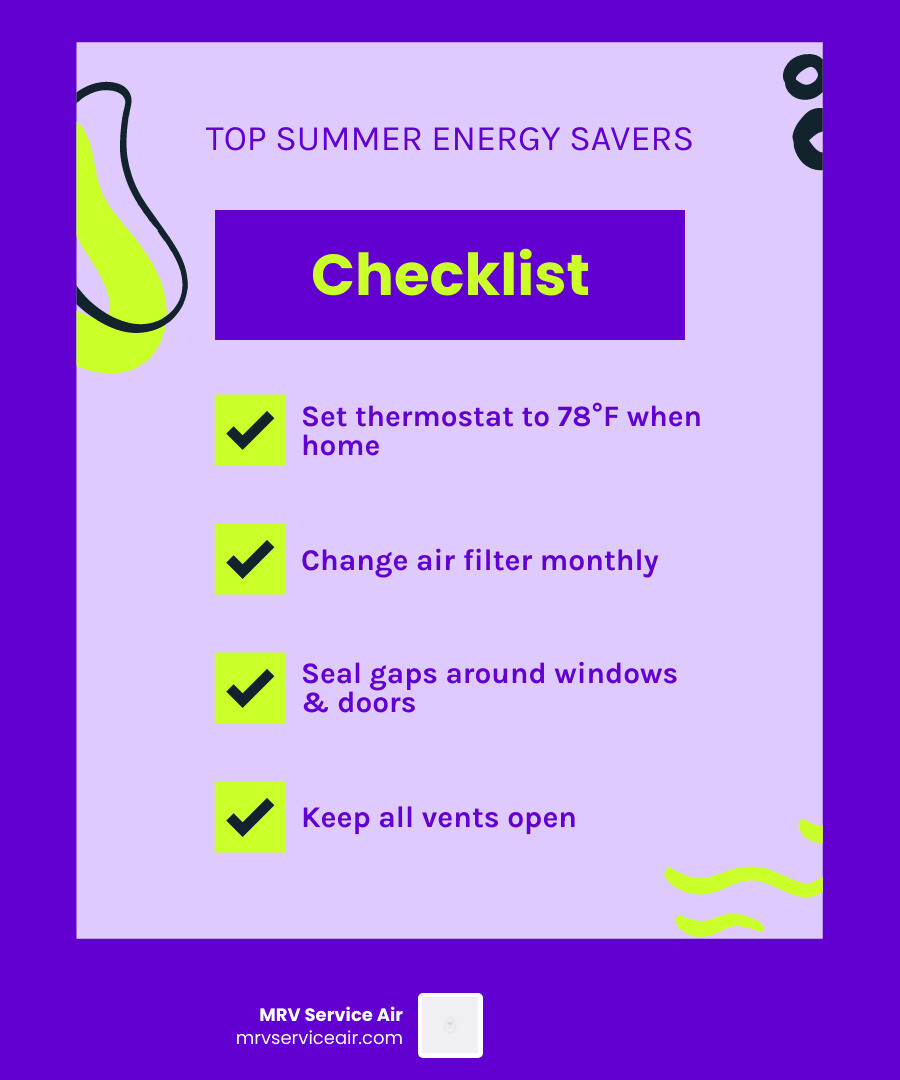
- Set your thermostat to 78°F when you are home and raise it when you leave
- Change your air filter monthly or at least every three months
- Seal gaps around windows, doors, and attic hatches
- Keep all vents open — closing them can damage your HVAC system
- Use ceiling fans on counterclockwise setting and turn them off when leaving a room
- Close blinds and curtains on sun-facing windows during the day
- Run appliances like dishwashers and dryers before noon or after 6 p.m.
- Shade your windows with screens or awnings to cut cooling costs by up to 25%
- Get your HVAC serviced at least once before summer peaks
- Ask about local rebates for duct sealing, smart thermostats, and new AC units
The Central Valley’s dry, intense heat is a different challenge than what homeowners in coastal or humid regions face. There is less moisture in the air, but the radiant heat from the sun bakes your walls, roof, and windows all day long. Without the right strategies in place, your system works overtime and your bills reflect it.
The good news is that most of the fixes are simple, low-cost, and something you can start today.
Mastering Summer Energy Saving Tips for Central Valley Homeowners
Living in Delano or Bakersfield means preparing for a marathon of heat. As we move through April 2026, it is the perfect time to audit your home’s cooling habits. One of the most impactful summer energy saving tips for central valley homeowners involves how you interact with your thermostat. While it is tempting to “blast” the AC at 68°F when you walk in from a 105°F afternoon, your home won’t actually cool down any faster. It only ensures your system runs longer and works harder than necessary.
Beyond the thermostat, your system needs physical care. Think of your HVAC unit like a car; you wouldn’t drive to Los Angeles and back every day in the summer without checking the oil. For residents in our neck of the woods, More info about AC services in Bakersfield and Delano can help ensure your unit is charged with refrigerant and ready for the peak. Regular maintenance and simple tasks like changing your air filter monthly can drastically improve efficiency. If you are looking for a comprehensive approach to lowering your utility costs, check out More info about energy efficiency services.
Summer energy saving tips for central valley homeowners: The 78-Degree Rule
The Department of Energy and local utility experts agree: 78°F is the “sweet spot” for summer comfort and savings. For every degree you set your thermostat above 80°F, you can save approximately 2% to 3% on your cooling costs. If you find 78°F a bit too warm, try using a ceiling fan to create a breeze—this allows you to feel just as comfortable at a higher temperature setting.
When you leave for work or a weekend trip, don’t turn the AC off entirely, as the walls and furniture will soak up the heat, making the unit work twice as hard to recover later. Instead, bump it up to 85°F. For those with older homes, More info about central HVAC services can help you determine if your current system is capable of handling these adjustments efficiently.
Why You Should Never Close Your Vents
There is a common myth that closing vents in unused rooms “redirects” air to the rooms you are using. In reality, modern HVAC systems are designed with specific pressure requirements. When you close more than 10% of your vents, you create a pressure imbalance. This forces the blower motor to work harder and can actually lead to a frozen evaporator coil or a damaged compressor. To keep your system healthy, keep all registers open and unobstructed by furniture or rugs. If you suspect your airflow is restricted, More info about ventilation work might be necessary to balance the system.
Seal Your Home Envelope to Trap Cool Air
In the Central Valley, the heat doesn’t just come through the air; it radiates through every crack and crevice. Sealing your “home envelope”—the barrier between the indoor and outdoor air—is one of the most cost-effective summer energy saving tips for central valley homeowners. This includes everything from the weatherstripping on your front door to the insulation in your attic.
If your attic is under-insulated (less than 6 inches thick), the heat from your roof will migrate directly into your living space. Additionally, ensuring your home’s layout supports efficient airflow is key. For those considering a remodel or a new build in Kern County, More info about planning and design can ensure your home is built for thermal efficiency.
Summer energy saving tips for central valley homeowners: Sealing Leaky Ducts
Did you know that in a typical home, about 20% of the air moving through the duct system is lost due to leaks, holes, and poor connections? That is money literally disappearing into your attic or crawlspace. Leaky ducts can cost homeowners $200 or more per year. Professional duct sealing ensures that the air you pay to cool actually reaches your bedrooms and living room. If your home feels unevenly cooled, More info about duct work services can identify where those losses are happening. Working with a qualified HVAC contractor is the best way to ensure your ductwork is airtight.
Identifying Sneaky Air Leaks
While windows and doors are obvious culprits, air leaks often hide in “sneaky” places:
- Light switches and outlets: Especially on exterior walls, these act as small chimneys for hot air.
- Attic hatches: These are often uninsulated and unsealed.
- Plumbing penetrations: Look under sinks where pipes enter the wall.
Using simple socket sealers behind outlet covers and caulking around window frames can make a noticeable difference in your indoor comfort levels.
Strategic Shading and Appliance Management
In the Central Valley, the sun is your biggest adversary. Blocking the sun before it hits your glass is far more effective than trying to cool the air once it’s inside. Shading your windows with protective screens or awnings can cut your cooling costs by up to 25%.
Beyond shading, how you use your indoor appliances matters. Every time you run the dishwasher or the dryer, you are adding heat and humidity to your home. To keep your home’s indoor air quality high and your temperature low, try these window treatment strategies:
- Blackout curtains: Use these on east-facing windows in the morning and west-facing windows in the afternoon.
- Reflective films: These can block a significant portion of UV rays.
- External solar screens: These are highly effective for the intense Valley sun.
Using Ceiling Fans Effectively
Ceiling fans are a homeowner’s best friend, but only if used correctly. In the summer, your fan should rotate counterclockwise to push a cool breeze downward. This creates a “wind-chill effect” on your skin. However, remember the golden rule: fans cool people, not rooms. If you aren’t in the room, turn the fan off to save energy.
Shifting Energy Usage to Off-Peak Hours
Many utility providers in Kern and Tulare County use time-of-use pricing. This means electricity is most expensive when demand is highest—typically between noon and 6 p.m. To save money:
- Do laundry early: Start your washer and dryer before 10 a.m.
- Run the dishwasher at night: This avoids adding heat to the house during the hottest part of the day.
- Cook outdoors: Use the grill instead of the oven to keep the kitchen cool.
Advanced Upgrades and Outdoor Efficiency
If your AC unit is more than 10 to 15 years old, it may be time to consider an upgrade. Technology has come a long way since the early 2010s. Modern systems, like high-efficiency heat pumps, use inverter technology to ramp their power up and down smoothly, rather than just blasting on and off. This results in much more consistent temperatures and lower bills.
For those with specific cooling needs, More info about ductless HVAC or mini-split HVAC systems can provide “zoned” cooling, allowing you to only cool the rooms you are actually using.
The Benefits of Modern Heat Pumps
Don’t let the name fool you—heat pumps are incredibly efficient at cooling. They work by moving heat out of your home during the summer. Because they don’t have to “create” cold air but rather transfer heat, they are often much more efficient than traditional units. If you are curious about how this technology works in our climate, More info about heat pump services can provide the details you need.
Maximizing Pool and Outdoor Savings
For Central Valley homeowners with pools, the pool pump is often the second-largest energy consumer in the house. Switching to a variable-speed pool pump can save you around 70% a year on pool-related energy costs.
| Feature | Standard Pool Pump | Variable-Speed Pump |
|---|---|---|
| Energy Use | High (Constant Speed) | Low (Adjustable Speed) |
| Annual Savings | Baseline | Up to 70% |
| Noise Level | Loud | Very Quiet |
| Lifespan | Standard | Generally Longer |
Additionally, shading your outdoor AC condenser unit with a tree or a trellis (ensuring there is still plenty of airflow) can help it operate more economically.
Frequently Asked Questions about Summer Energy Saving
What is the ideal thermostat setting for Central Valley summers?
The ideal setting is 78°F while you are home. If you are going to be away for more than six hours, bump it up to 85°F. For every degree you raise the setting above 80°F, you can see a 2% to 3% reduction in your cooling costs.
How often should I service my HVAC system?
We recommend professional servicing twice a year—once in the spring before the heat hits, and once in the fall before the winter chill. A pre-summer tune-up ensures your system is clean and efficient. If you are also looking ahead to the cooler months, More info about furnace services can help you stay prepared year-round.
Are there local rebates for energy-efficient upgrades?
Yes! Many local programs offer incentives for duct sealing, installing smart thermostats, or upgrading to high-efficiency AC units. These programs change frequently, so it is always a good idea to check More info about specials and rebates to see what is currently available for your area.
Conclusion
Staying cool in the Central Valley doesn’t have to break the bank. By combining simple behavioral changes—like the 78-degree rule and off-peak appliance use—with smart home maintenance, you can keep your home comfortable all summer long. At MRV Service Air, we are proud to serve the Delano, Kern County, and Tulare County communities with prompt, quality service at prices you can afford.
Whether you need a quick tune-up, duct sealing, or a complete system upgrade, our team is here to help you maximize your home’s efficiency. More info about our complete HVAC services is just a click away. Let’s make this summer your most comfortable and cost-effective one yet!