








Why Knowing How Extreme Heat and Agricultural Dust Stress Your System Could Save Your HVAC This Summer
How extreme heat and agricultural dust stress your system is one of the most overlooked threats facing Central Iowa homeowners and small business owners in 2026. If you want a quick answer, here it is:
How Heat and Agricultural Dust Stress Your HVAC System
| Stressor | What It Does to Your System |
|---|---|
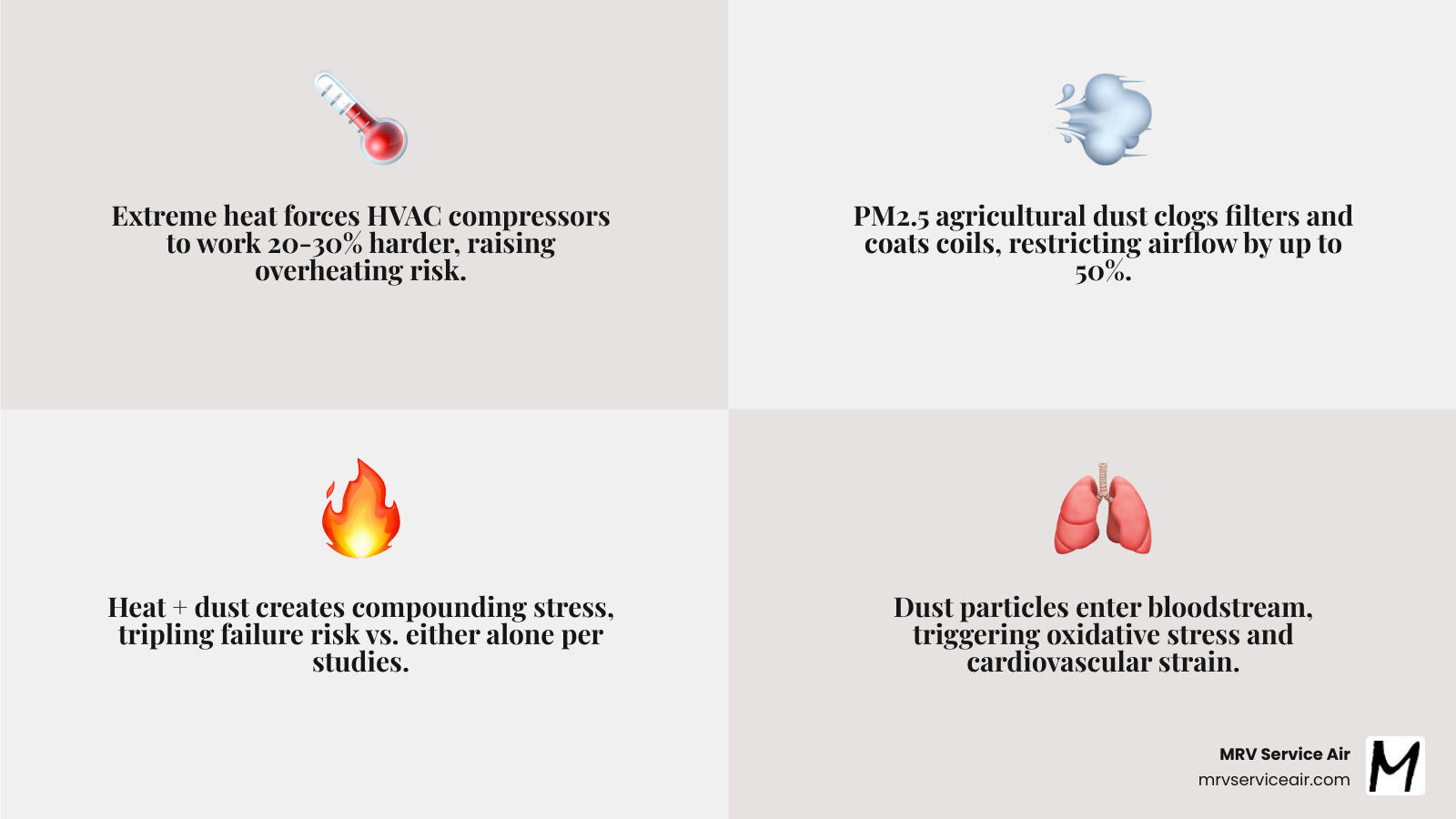
| Extreme heat | Forces the compressor to work harder, raising the risk of overheating and burnout |
| Agricultural dust (PM2.5) | Clogs filters and coats condenser coils, restricting airflow |
| Both together | Creates a compounding effect — restricted airflow plus thermal overload — that can cause sudden system failure |
| Nighttime heat | Prevents overnight recovery, keeping the system under sustained stress |
| Pesticide and chemical particles | Can corrode internal components over time when pulled through the system |
Summer in Central Iowa has always been tough on HVAC equipment. But in 2026, the combination of record-breaking heat and heavy agricultural particulates in the air around Des Moines, Ankeny, Waukee, and surrounding communities is pushing systems harder than ever. During harvest season, grain handling and field activity stir up fine dust particles — some small enough to slip straight through a standard filter and into your system’s core components. Add extreme heat on top of that, and research shows the risk doesn’t just add up — it multiplies. A California study tracking over 1.5 million deaths found that the risk of harm on days with both high heat and high pollution was roughly three times greater than either condition on its own. Your HVAC system faces a similar kind of compounding pressure: heat alone strains it, dust alone clogs it, but the two together can push it toward failure far faster than most homeowners expect.
The Biological Impact: How Extreme Heat and Agricultural Dust Stress Your System
When we talk about how extreme heat and agricultural dust stress your system, we aren’t just talking about your air conditioner; we’re talking about your body. The biological toll of these environmental stressors is significant. Research into climate health indicates that the primary pathway for damage is through oxidative stress. This is a fancy way of saying your body faces an imbalance where it produces too many reactive oxygen species (ROS) and can’t clear them out fast enough. This leads to systemic inflammation, which can strain your heart and lungs.
When you inhale fine particulate matter (PM2.5) common in Iowa agricultural zones, these tiny particles don’t just sit in your lungs. They are small enough to penetrate the alveolar sacs and enter your bloodstream directly. Once there, they can trigger cardiovascular strain. When combined with 100-degree Iowa humidity, your heart has to work double-time to pump blood to the skin for cooling while simultaneously dealing with the inflammatory response caused by the dust.
To understand the cooling side of this battle, it helps to look at The Science Of Sweat What Happens To Your Ac When Its 110 Degrees. Just as your body uses sweat to regulate temperature, your AC uses refrigerant to move heat. When the air is thick with dust, neither system can “breathe” effectively.
How extreme heat and agricultural dust stress your system during Iowa harvest cycles
In communities like Mitchellville, Carlisle, and Granger, the harvest cycle brings a specific type of air quality challenge. Grain handling creates a toxic cocktail of soil, plant material, and smoke particles. This can lead to conditions like Organic Toxic Dust Syndrome or “Farmers Lung,” a type of respiratory illness caused by inhaling organic dust.
Furthermore, high heat causes pesticide volatilization. This means chemicals applied to fields can turn into gases more easily in the 2026 heatwaves, making them more dangerous to inhale. Soil erosion during dry spells in the Des Moines area further increases the amount of “legacy pollutants” (like older fertilizers) that get kicked up into the air we breathe.
Mechanical failure: How extreme heat and agricultural dust stress your system and its components
Your HVAC system is a mechanical mirror of your own respiratory system. To keep your home in Altoona or Ankeny cool, the outdoor condenser unit must “exhale” the heat gathered from inside.
- Condenser Coils: These coils act like the system’s radiator. When agricultural dust coats them, it acts as an insulator, trapping heat inside the unit.
- Airflow Restriction: Clogged filters and dirty coils mean the fan has to spin faster and longer to move the same amount of air.
- Compressor Burnout: The compressor is the “heart” of your AC. When it operates outside its thermal safety margin because it can’t shed heat, the internal oil can break down, leading to a total mechanical heart attack.
To prevent this, know How Often To Schedule Tune Ups When The Dust Starts Flying. Waiting until the system stops blowing cold air often means the damage is already done.
Why Central Iowa Homes Face Unique Environmental Challenges in 2026
By May 2026, we’ve seen that Central Iowa isn’t immune to the “Double Whammy” of climate change. Cities like Waukee and West Des Moines often experience air stagnation events. This is when warm, heavy air sits over the valley, trapping ground-level ozone and wildfire smoke from western states.
When the air is stagnant, the dust from nearby farming operations doesn’t blow away—it hovers. This creates a high-concentration zone of pollutants that your AC unit is forced to process. We’ve learned that Why The Valleys Dust And Heat Are Your Acs Worst Enemies is due to this lack of air movement, which forces your system to recycle the same dirty, hot air.
Understanding how extreme heat and agricultural dust stress your system and your indoor air quality
Your home is supposed to be a sanctuary, but “infiltration” is a real issue. Dust and Volatile Organic Compounds (VOCs) can slip through tiny cracks in windows and doors.
To combat this, we recommend looking at MERV (Minimum Efficiency Reporting Value) ratings. While a standard filter might catch large dust bunnies, you need higher-rated filters to stop the fine agricultural particulates common in Iowa. However, be careful—if a filter is too restrictive, it can actually cause the mechanical stress we’re trying to avoid. Exploring Valley Dust Vs Your Hvac A Survival Guide can help you find the right balance between clean air and system health.
Practical Strategies to Mitigate Heat and Dust Impacts
We want to help you stay ahead of the heat. Here are some actionable steps you can take today:
- Check Filters Monthly: During the peak harvest or high-heat months in Des Moines, don’t wait the standard three months. Check your filter every 30 days.
- Clear the Perimeter: Ensure there are at least two feet of clear space around your outdoor unit. Remove any tall weeds or corn husks that might have blown against it.
- Seal Your Ducts: Leaky ducts can pull dusty attic or crawlspace air into your living areas.
- Rinse the Coils: Using a gentle stream from a garden hose (not a pressure washer!) to rinse the outdoor coils can remove the layer of “field grime” that builds up.
- Nighttime Management: If the air quality is good but it’s hot, use your AC to “pre-cool” the home at night. However, if the dust is flying, keep windows closed to prevent infiltration.
For a deeper dive into maintenance, check our guide on How To Maintain Your Ac In Extreme Heat And Dust.
Protecting Vulnerable Populations in Des Moines and Surrounding Areas
At All Seasons HVAC LLC, we are particularly concerned about those most at risk. Agricultural workers are 35 times more likely to die from heat-related stress than workers in other industries. In our region, many farmworkers identify as Hispanic or Latino and may face barriers to healthcare or work in “piece-rate” systems that discourage taking necessary cooling breaks.
Older adults in Norwalk or Indianola are also at higher risk. As we age, our body’s ability to regulate temperature diminishes. During the top 1% of hottest and most polluted days, the risk of death for those over 75 increases by more than a third.
If you’re wondering, “Is My Ac Broken Or Is It Just Too Hot,” it’s important to remember that for vulnerable people, a struggling AC isn’t just an inconvenience—it’s a health emergency.
| Condition | Risk Factor Increase (Combined Heat + Dust) | Primary Symptom |
|---|---|---|
| General Population | 21% increase in mortality risk | Shortness of breath, dizziness |
| Adults Over 75 | 34% increase in mortality risk | Confusion, rapid heart rate |
| Chronic Respiratory Issues | 3x greater risk than heat alone | Asthma flare-ups, heavy coughing |
| Outdoor Workers | 35x higher heat death rate | Heat exhaustion, dehydration |
Frequently Asked Questions about Environmental HVAC Stress
How often should I change my HVAC filter during the Iowa harvest season?
In the Des Moines metro and surrounding rural areas, we recommend checking your filter every 30 days during harvest. The sheer volume of corn dust and soybean particulates can clog a standard filter much faster than normal household dust.
Can agricultural dust cause permanent damage to my air conditioning system?
Yes. If dust is allowed to bypass the filter, it can coat the evaporator coil inside your home. This leads to ice buildup and can eventually cause the compressor to fail. Additionally, certain agricultural chemicals can be corrosive to the delicate aluminum fins on your outdoor unit.
Why is the combination of heat and dust more dangerous than heat alone?
It’s a “Double Whammy.” Heat forces your system to run longer, while dust makes it less efficient at cooling. This means the system runs “hotter” internally, leading to faster wear and tear and a much higher likelihood of a mid-summer breakdown.
Conclusion
Understanding how extreme heat and agricultural dust stress your system is the first step toward a more resilient home. At All Seasons HVAC LLC, we’ve seen how the Central Iowa climate has shifted. From the cornfields of Madrid to the suburbs of West Des Moines, the pressure on our cooling systems is at an all-time high.
We are committed to providing prompt, quality service at affordable prices to ensure your family stays safe and comfortable. Whether you need a high-efficiency filter upgrade or a comprehensive system tune-up to clear out a season’s worth of dust, our team is here for you. Don’t let the “Double Whammy” of 2026 catch you off guard.
For those looking for a long-term solution, discover Why Your Central Valley Home Needs A Heavy Duty Hvac Strategy and how we can help you implement it. Stay cool, breathe easy, and let us handle the stress on your system.